
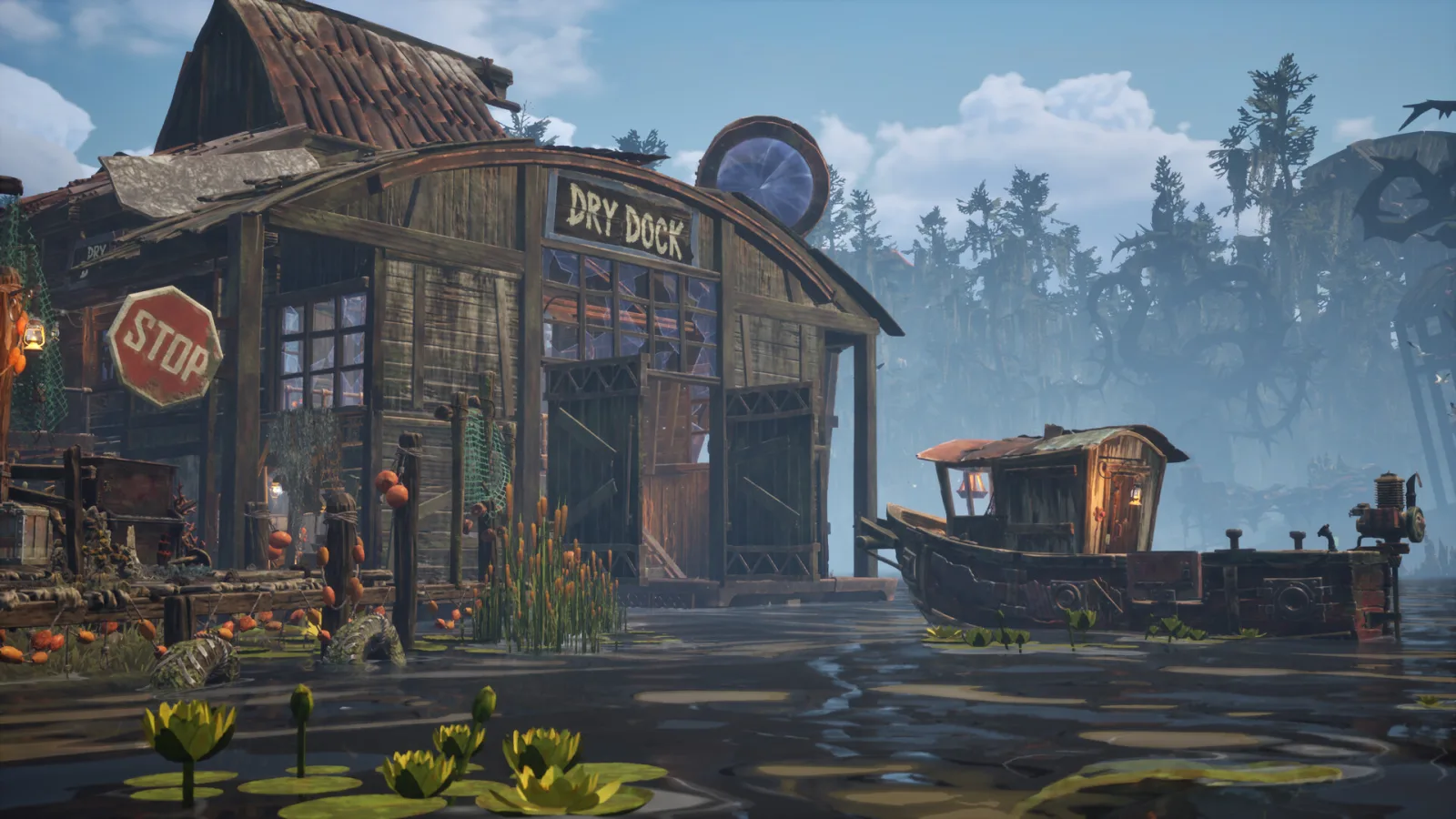
The water-wheel stage at The Throat is where the demo stops holding your hand. Everything before it is a list: find the fuel, fit the parts, repair the pump. This stage is a small routing puzzle, and the interface gives you less feedback than the rest of the game, which is why "only one wheel is turning" is one of the most common search queries attached to Dreadmoor.
What the wheels actually do
The gate is water-driven, not purely electrical. Power from the generator runs the machinery, but the gate's mechanism is fed through a water-wheel system, and the objective asks you to route water to both wheels rather than to one.
That is the whole reason the sequence exists: a gate that opened on electricity alone would make the repair chain pointless. It also explains the failure mode. The Gate Control does not respond while only one wheel is turning, which reads as a bug if you assume the first spinning wheel finished the job.
Repair first, route second
The flow controls will not complete while the machinery is incomplete. Before touching a single channel, the repair objective has to be closed:
| Part | Why it blocks the water stage |
|---|---|
| Thermal Coil | the electrical component is burnt out, so the machinery has no power path |
| Gear / Axle | the drive train is missing a gear, so a wheel can be fed but not driven |
| Two Buckets | each side of the wheel machinery needs its own |
| Water Pump | the feed is damaged, so routing water does nothing until it is repaired in place |
If the journal still says repair the waterway machinery, stop walking the channels. The generator guide lists where each part goes and why the pump should never be crafted.
Four controls, four routes
When the machinery is complete, the objective switches to water flow. Four controls sit around the channels, and each one changes a different route through the system. They are physical devices operated where they stand, not four settings on a single panel, so the loop is:
- Adjust one control.
- Watch which wheel responds.
- Walk to the next control.
- Repeat until both wheels are turning at once.
The order does not matter. What matters is changing one thing at a time — if you move two controls between looks at the wheels, you lose the ability to tell which one did what, and the puzzle becomes guesswork.
Why the indicator lights mislead
Each control has its own indicator, and a green light only reports that control's state. It does not report the system's state. A channel can be set correctly and still deliver no water because the route downstream is closed, which is exactly how you end up with one bright green panel and two stationary wheels.
Watch the wheels. Use the journal as the authority on whether the stage is finished. Treat the lights as local feedback only — the same way the demo walkthrough treats the objective text as the source of truth for every earlier step.
Reading the journal correctly
Three lines cover the entire end of the demo, and each one points at a different fix:
- "Repair the waterway machinery" — a part is missing. Check the coil, the gear, both buckets and the pump before touching any control.
- "Configure the water flow" — the machinery is complete and at least one route is still closed. This is the only stage where the four controls matter.
- "Open the gate" — both wheels are turning. The Gate Control is live again.
Most reported soft-locks at The Throat are one of these two mistakes: routing water while the journal still asks for repairs, or leaving one route closed and assuming the objective is bugged because one wheel is already spinning.
When both wheels turn
Return to the Gate Control and use it. The gate opens, and sailing through ends the demo. The build has its own questline, and the developer has not confirmed whether that progress carries into Early Access — the demo versus full game page separates the confirmed scope from the open questions.
If the gate lifts but you are short on supplies for the trip back, the fuel and supplies guide is the relevant next read: the return leg is where starter tanks run dry, not the outbound one.