
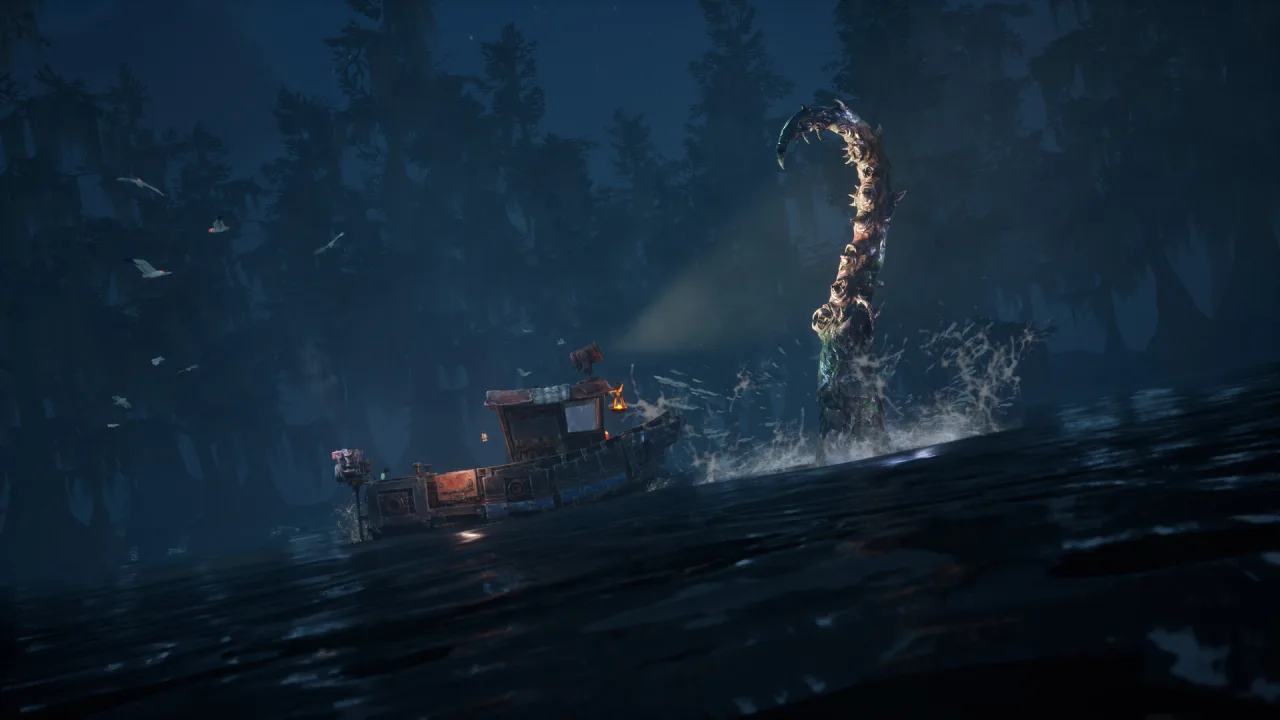
Dreadmoor's search demand includes a very specific question — how do you track diseases — and it is worth answering carefully, because the honest answer is not the one most guide sites give. The game has a disease. It has a detailed logic for how that disease works. What it does not yet have, in any material available to players, is a HUD element that tracks it for you.
The disease is the Sea Blight
Every infection in Dreadmoor traces back to one substance. The Sea Blight was discovered in the far north before the collapse and was not originally a blight at all: it was used in medicine, science and engineering, and it was considered a breakthrough.
After the collapse it changed. It now spreads through water, clings to surfaces, lingers in the air as a faint green mist, and mutates whatever it comes into contact with. The full origin and logic are on the Sea Blight page; what matters here is the human outcome.
What infection looks like in a person
The dev diary is unusually direct about this, and the progression has four recognisable states:
| Stage | What happens |
|---|---|
| Exposure | contact with contaminated water, mist or tissue; nothing visible yet |
| Mental fracture | sanity begins to give way before the body shows changes |
| Partial mutation | the body twists, but the host survives — at the cost of gradually losing their mind |
| Full transformation | what remains is feral and no longer human |
The order is the important part. The Sea Blight does not work like a poison that damages the body and leaves the mind intact; it takes the mind first. That is why the setting treats infected survivors as dangerous rather than sick, and why cults in the world read mutation as transformation rather than corruption.
What the demo actually shows
The demo does not hand you a status screen. It shows the disease through people:
- An NPC describes another survivor as a victim of "that shitty disease" and points out that he has not grown gills yet — the game's clearest line that infection is measured in visible bodily change.
- Settlements treat the infected as a fact of life rather than a medical emergency.
- Creatures across the world are the same process at a different stage, stabilised over generations.
That is the whole of the presentation so far. It is worldbuilding delivered through dialogue, not a UI system.
So how do you track it?
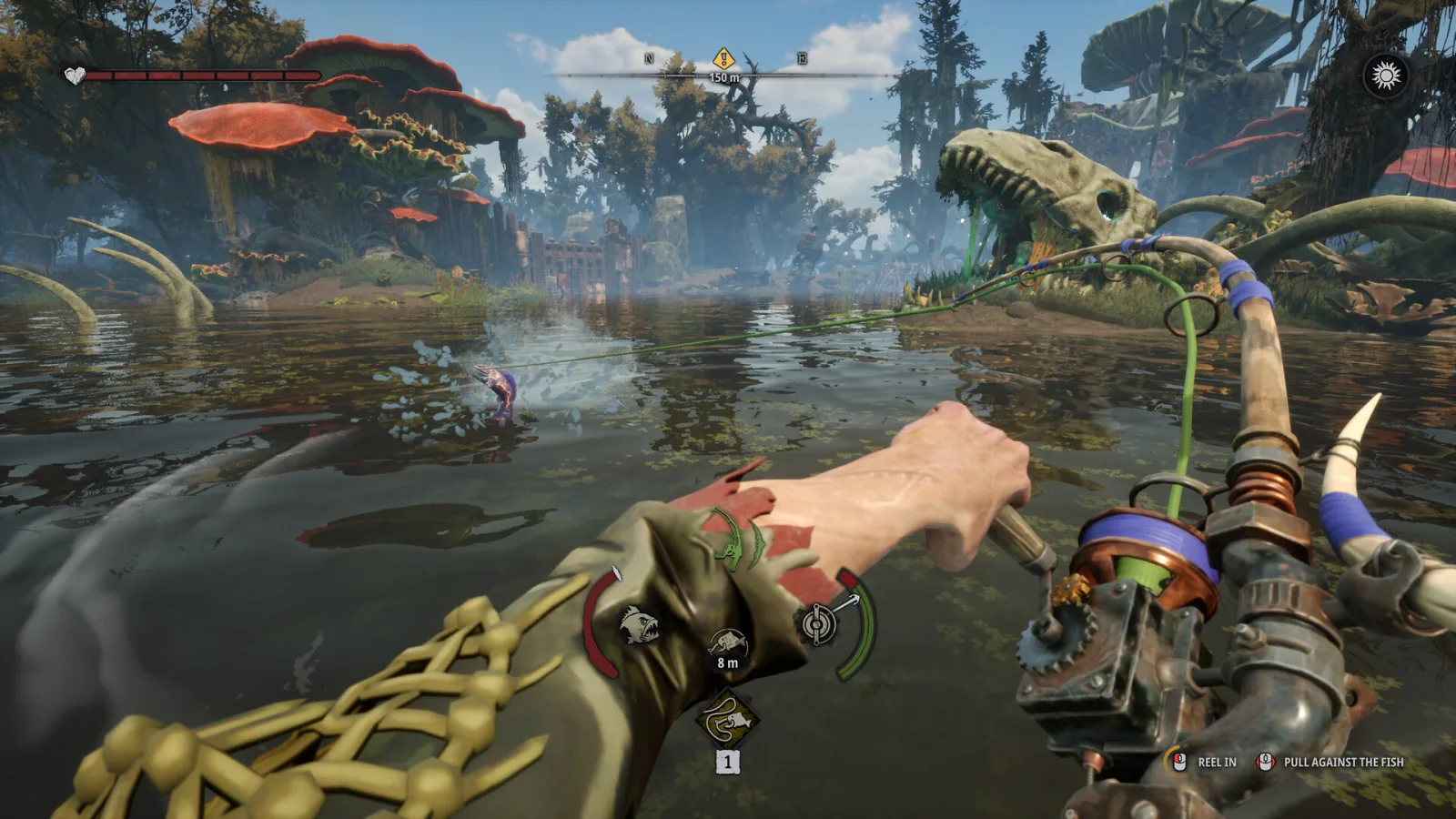
Honest answer: there is nothing documented to track it with. No disease meter, no symptom list, no cure timer, no status panel has appeared in the demo material, the Steam page, the dev diaries or the published interviews reviewed for this page.
What you can track instead:
- Your own exposure. The Blight travels through water, surfaces and airborne mist. Time spent in contaminated areas is the variable you control.
- Visible change in NPCs. Gills, skin and behaviour are the game's stated language for infection. Dialogue points them out before anything mechanical would.
- The journal. It tracks quests and repairs, not infection. Do not wait for it to warn you.
If a status system ships with Early Access, this section is the first thing that gets rewritten — and it should be treated as a documented gap, not as a hidden mechanic someone else has already solved.
What is still unconfirmed
Four questions are open, and guessing at them would be worse than leaving them blank:
- Whether the player character can be infected at all, or only exposed.
- Whether a cure or treatment item exists in the full build.
- Whether partial mutation is a player-facing state with gameplay effects.
- Whether the disease progresses on a timer, through story beats, or not at all.
The world and lore page covers what the setting does confirm about the collapse, and the night survival guide covers the practical side: which risks are worth taking after dark and which are just exposure with extra steps.
For new players, the useful framing is that Dreadmoor treats infection as a hazard of place, not a debuff to manage. The beginner guide builds its first-hour plan around that assumption, and nothing in the demo contradicts it.